
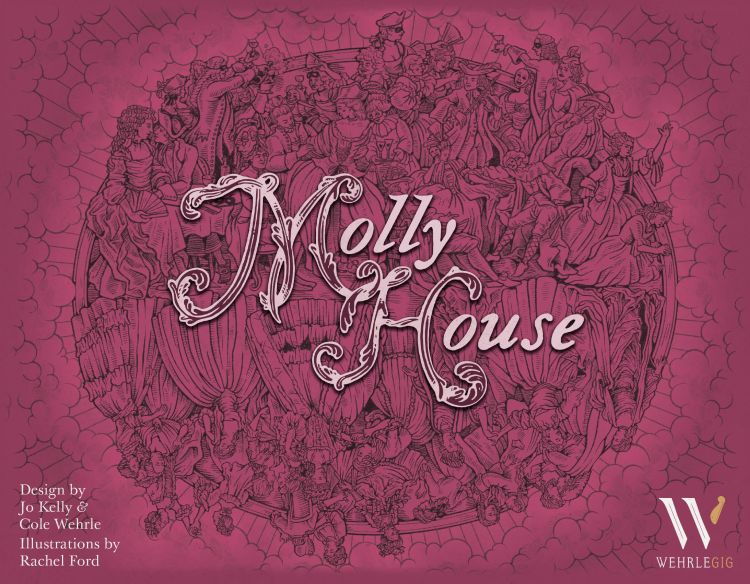
Designers: Jo Kelly, Cole Wehrle
Publisher: Wehrlegig Games
A good game can have a fine theme, and a great theme does not automatically cause a game to excel. When the two blend together seamlessly, however, especially in complex games, you get two halves of an indispensable whole. Some part of it, undoubtedly, can be traced back to the complex wargames that have existed for a while at this end of the complexity spectrum, but as the hobby of gaming expands and responds to the social conditions it exists within, new and exciting themes and types of gameplay emerge. One such example is Molly House, a game of exploration and queer community within the challenging confines of early 1800s London.
The Committee found Molly House challenging, intricate, and necessary, both as an exploration of player agency within the game they play and as a deep dive into a particular slice of history. The tensions run deep throughout the game as gossip piles up and players become suspected of informing on the very houses that they attend and celebrate at. Players’ loyalty is tested against social conventions and an ever-present threat of harm. Ultimately, either the community is eliminated (through active or passive means) or it endures, but your particular part played in that experience will sit with you beyond the table. For a thought-provoking theme well-implemented by design, strategy, and gameplay, we’re excited to name Molly House our 2026 pick for Complex Games.
What Our Committee Is Saying
The semi-cooperative elements of Molly House are particularly interesting, as the game can cast players in the uncomfortable position of working against the joy and safe communities it seeks to celebrate. At a certain point, is it better to win the game or participate within the game’s conventions? Something worth thinking about even after the game has ended.
Eric Yurko
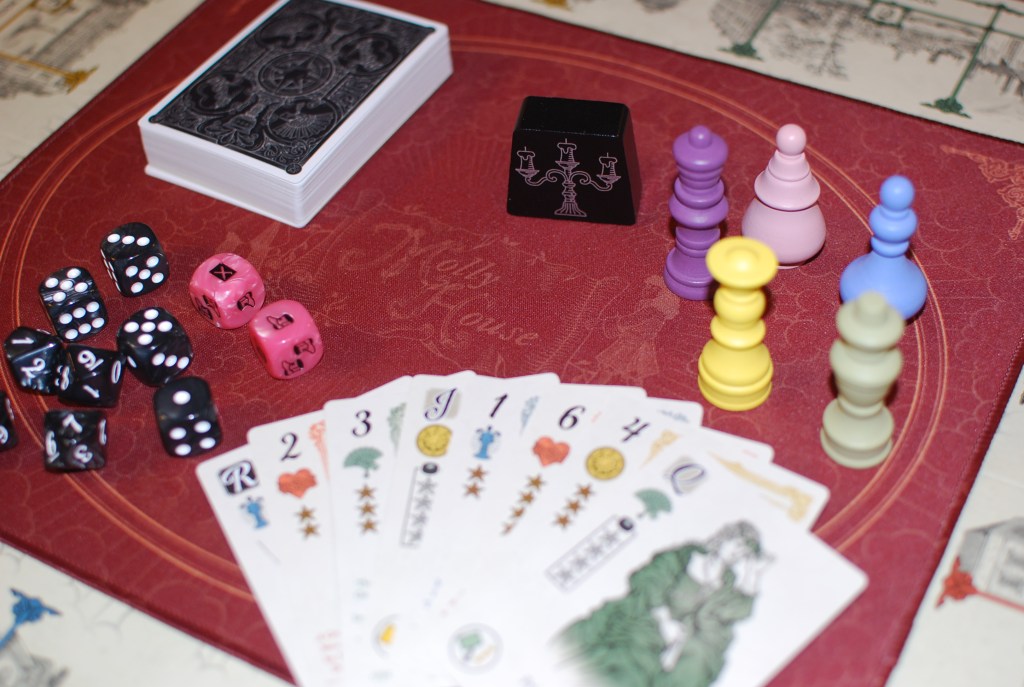
Photos courtesy of Jonathan H. Liu. All rights reserved.

